CIRCOPLAST is an INTERREG FWVL project that aims to develop an innovative and sustainable process for removing brominated flame retardants (BFRs) from plastic waste. This will make it possible to recycle and reuse plastics that are currently difficult to process.
Key objectives:
Develop a green extraction technology
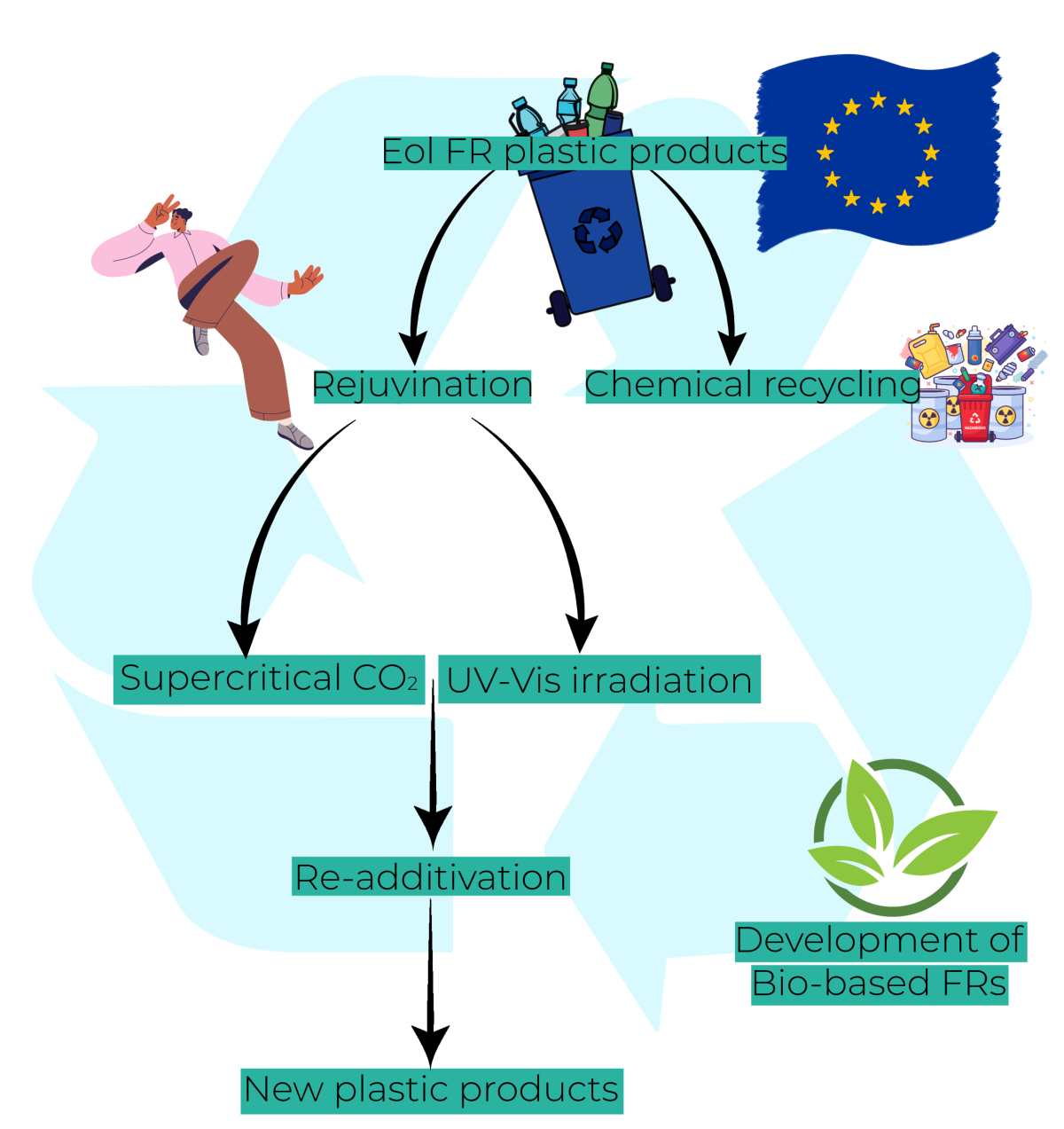
- Remove BFRs using environmentally friendly techniques such as UV-Vis radiation from the one hand and supercritical fluids (scCO₂) with the presence of co-solvents on the other.
Scale-up the process
- Transition from a batch process (developed in the previous VALBREE project) to a continuous extrusion process using a twin-screw extruder equipped with UV lamps, scCO₂ extraction zones, and co-solvents for more efficient decontamination.
Expand recycling to other challenging polymers
- Develop a biological/enzymatic method for recycling polyurethane materials, which often contain banned flame retardants.
- Identify and valorize the degradation products into new materials.
Develop new sustainable polymer formulations
- Create next-generation plastics using recycled materials and bio-based lignin building blocks to produce sustainable flame retardants and polymers.
Support the circular economy in plastics
- Provide plastic recyclers and processors with cutting-edge, economically viable, and environmentally friendly recycling technologies.
- Promote a cross-border collaboration to integrate recyclates into high-quality products and enable the transition to a circular plastics economy.